





Introduction — Giudecca Unveiled: Jewish Lives and Stories in Palermo
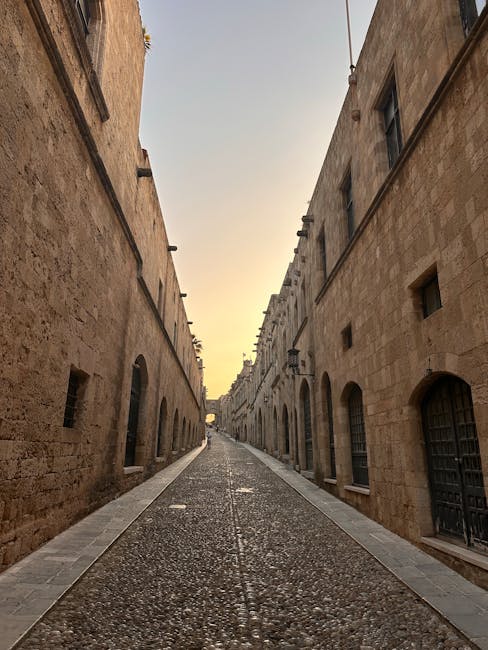
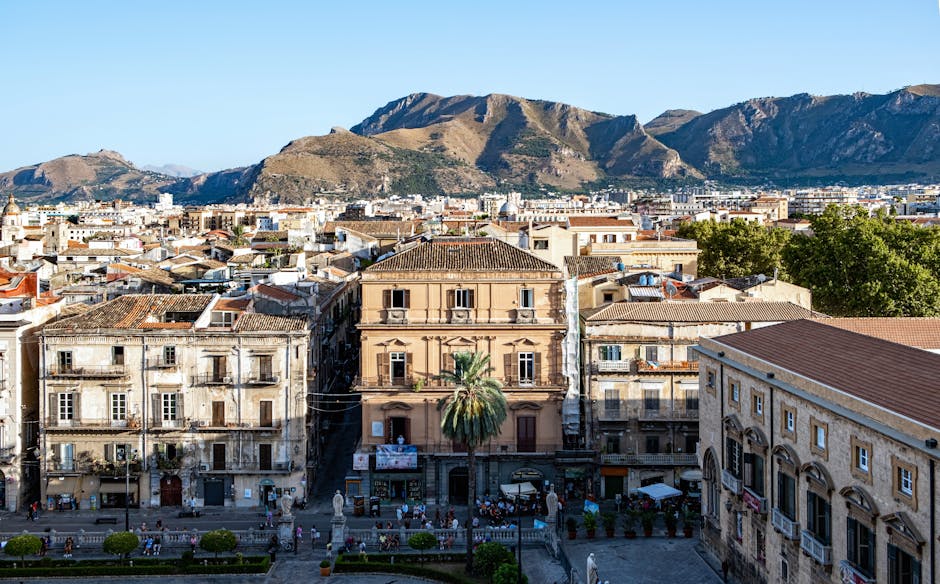
The Giudecca of Palermo is more than a neighborhood: it’s a layering of urban, human and spiritual histories that still speaks today, between stones smoothed by centuries of footsteps and façades that hint at interrupted lives. Nestled in the city’s historic heart, the Giudecca unfolds at the crossroads of the Cassaro (today Via Vittorio Emanuele), Piazza Marina and the alleys that slope down toward the old port. The word “Giudecca” immediately evokes the medieval Jewish presence — a dynamic community of merchants, artisans and intellectuals who helped shape Palermo’s identity before the expulsions and forced conversions of the late Middle Ages and the Renaissance. Walking those same streets today, you’ll find traces: plaques, niches, street names and oral stories that help reassemble the mosaic of Jewish life long ago.
This article aims to guide the curious visitor through tangible places — squares, markets, museums, lanes — while giving voice to the people and stories that keep this memory alive. You’ll find exact addresses, practical details (opening hours, prices in euros), immersive descriptions of spaces and local tips to make the most of a walking visit. The tone mixes history and practicality: the goal is to offer a broad perspective useful both for a traveler with just a half-day and for a history buff wanting a deeper immersion.
This guide isn’t meant to reconstruct an exhaustive history — Giudecca’s archives are fragmentary and often scattered — but rather to propose a sensitive route: where to go, what to see, which material and immaterial traces to follow, and how to read the city through the lens of Jewish practices, trades, conflicts and coexistence. The stories we tell are often those of merchants, doctors, women running workshops, itinerant scholars and entire families who built trade networks between Palermo, North Africa and the Iberian Peninsula. We also address dramatic moments — forced conversions, expulsions, discrimination — and times of flourishing, when the Giudecca was a Mediterranean crossroads.
Alongside descriptive texts, this guide includes visual cues: nine image markers placed throughout the route to help you pinpoint the most evocative views (façades, markets, fountains, mosaics). These markers are meant to inspire visual research from image banks or to prepare your camera. Finally, each section ends with local tips: small precautions, off-season timing, shopkeepers to greet, and street specialties to taste. Ready for the walk? Put on comfortable shoes: Giudecca Unveiled begins now.
1) Visible Traces: Walks between Piazza Marina and Via Vittorio Emanuele
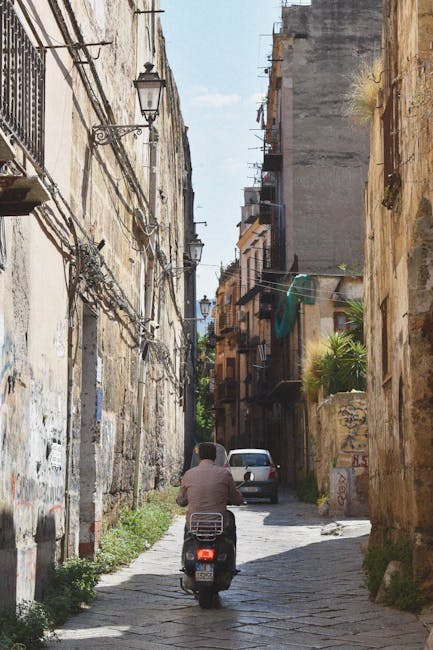
A great way to get a first impression of the Giudecca is on foot, starting from Piazza Marina (Piazza Marina, 90133 Palermo PA). The square, known for its shaded gardens and the gigantic centennial plane tree (platano dei cent’anni), is an urban anchor that immediately gives the sense of a place where history and daily life meet. The walk toward the Cassaro (today Via Vittorio Emanuele, 90133 Palermo PA) takes you through narrow lanes, fountains and small squares that once housed the workshops and stalls of Jewish artisans: tanners, potters, spice traders and moneylenders.
This walking route (recommended duration: 1 to 2 hours) includes specific stops: the Fontana del Garraffo (Piazza Marina, 90133 Palermo PA) — an old water supply point — and commemorative plaques often fixed to building walls marking the former Jewish presence. Access to these sites is free. Take time to study façades, stone lintels and cellars that open onto the street: the topography still preserves hints of areas once reserved for artisanal workshops.
Hours and practical tips: Piazza Marina is accessible at all times; for the walk, favor the morning (9:00–12:30) or late afternoon (16:00–19:00) to avoid intense summer heat. The lanes are cobbled and sometimes uneven: closed shoes are recommended. If you want a private guided tour, expect around €60–120 for two hours (local bilingual guide); booking in advance through tourist offices or independent guides is advised.
Illustrative story: imagine Isaac, a 15th-century silk merchant, walking up the Cassaro to deliver fabrics to an Arab-Norman notary; or Rebecca, a seamstress who sold shawls and textiles to the city’s noblewomen. These figures, reconstructed from documents and oral traditions, help you read the urban space not only as stone but as a human network. History becomes tangible when you realize each alley could be at once workshop, shop and negotiation parlor.
2) Sites of Memory and Museums: Where to Understand the Community’s History
To move from wandering the streets to a more systematic understanding, several museums and institutions in Palermo preserve objects, documents and temporary exhibits that shed light on the Jewish presence in Sicily. Among the essential sites, start with the Galleria Regionale della Sicilia — Palazzo Abatellis (Via Alloro, 4, 90133 Palermo PA). Opening hours: Tuesday to Sunday, 9:00–19:00, closed Monday. Indicative price: €8.00 (full), reductions to €4.00 for students and seniors under certain conditions. The palace houses medieval and Renaissance art collections that testify to cultural exchanges across the Mediterranean, useful for placing the Giudecca within a broader artistic and religious context.
Another recommended stop: the Museo Archeologico Regionale « Antonino Salinas » (Via Bara all’Olivella, 24, 90133 Palermo PA). Hours: Tuesday to Sunday, 9:00–19:00; full price about €6.00–10.00 depending on temporary exhibitions. The Salinas preserves inscriptions, architectural elements and funerary artifacts from across the province, allowing visitors to identify influences and trade networks — essential clues to understanding Jewish life in the city.
You should also consult the holdings of the diocesan and municipal archives (Archivio di Stato di Palermo — Via Maqueda, 157, 90133 Palermo PA; hours by appointment, consultation fees vary). These archives contain notarial registers and conversion records that document coexistence, tensions and sometimes mixed marriages. On-site consultation usually requires a symbolic fee (free or €2–5 for printouts and reproductions); booking ahead is strongly recommended.
Practical tip: combine a visit to Palazzo Abatellis or the Salinas with a morning walk; both museums are within a 10–20 minute walk from the historic center. Be sure to check official websites for unexpected closures and temporary exhibitions (prices and hours often change during high season).
3) Markets, Flavors and Daily Life — Ballarò, Vucciria, and Giudecca Cuisine
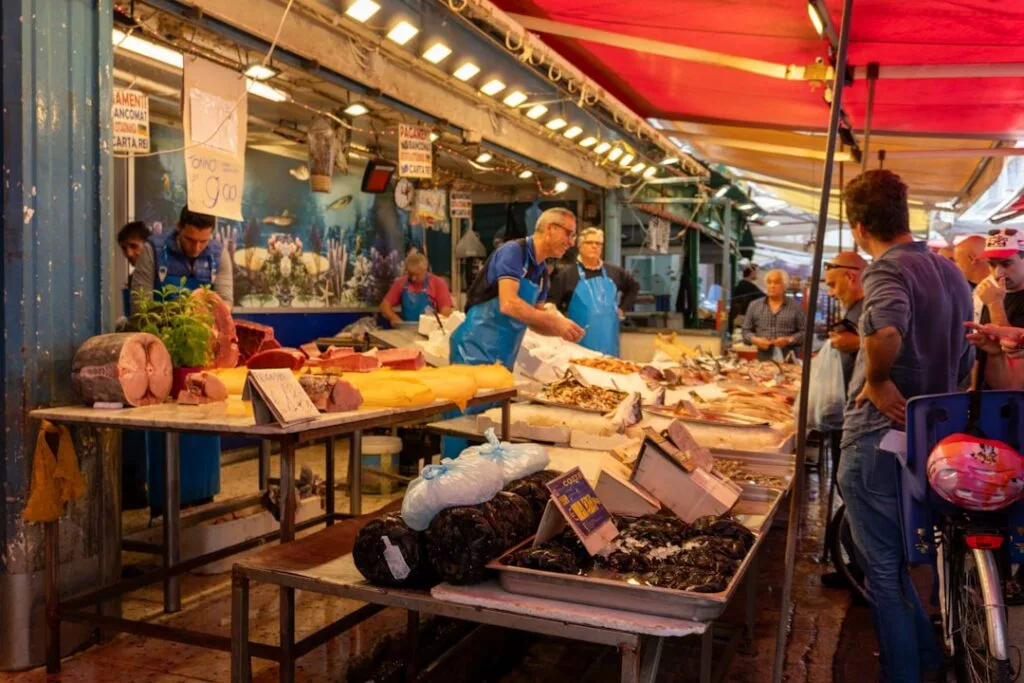
The Giudecca can also be read through its markets: the chatter, the scents of spices, the stalls of fish, meat, vegetables and handmade goods. Two markets stand out for their authenticity and historical roots: il mercato di Ballarò (Via Ballarò, 90134 Palermo PA) and il mercato della Vucciria (Piazza Caracciolo / Via Roma area, 90133 Palermo PA). These markets are mostly open-air and free to enter. They operate from early morning until the afternoon: recommended hours 7:00–13:00.
Ballarò is the liveliest for fresh produce and atmosphere: here you’ll find ingredients that recall Sephardic and Mediterranean Jewish cuisines — citrus, aromatic herbs, dried fish and spices. The Vucciria, more compact, retains a bohemian feel: small trattorie and street food stalls offer Palermo classics like sfincione (a thick, topped bread similar to pizza), arancini (rice balls) and panelle (chickpea fritters), specialties that local Jewish communities sometimes adapted according to dietary restrictions or local practices.
To understand the relationship between food and Jewish culture in Palermo, sample street dishes from traditional vendors (indicative prices: panelle €1.50–2.50, arancini €2.50–4.00, a shared slice of sfincione €3.00–5.00). Local tip: always ask whether a product contains lard or was fried in shared oil — that detail matters to visitors mindful of specific dietary customs.
Voices from daily life: picture a stall run by Hannah, specializing in medicinal herbs and ointments — trades often practiced by Jewish women or mixed families; or Simcha, a textile broker who negotiated spice and fabric shipments between Palermo and Tunis. These stories make sense when you touch sacks of spices, smell the mint and watch market gestures.
4) Stories and Characters: Imagined Voices to Recompose Lives
Archives don’t always provide full biographies; often they offer fragments: a will, a transaction, an accusation, a donation. To bring those fragments to life, it helps to reconstruct typical figures — not as precise documentary portraits, but as heuristic tools to understand Giudecca life. Here are four composite profiles inspired by general documents and Mediterranean history:
- Isaac di Giudecca, the merchant: a dealer in silks and spices, he runs a counter near the Cassaro. His day: rising at dawn, receiving cargoes, bargaining with Catalan and Berber sailors, writing commercial letters in Judeo-Spanish. He sometimes funds the refurbishment of a niche used for improvised prayers in a cellar. His network stretches from Palermo to Marseille and Tunis.
- Miriam, the scholar: a teacher and copyist of religious documents, she can read and write in Hebrew and Arabic. She passes knowledge on to other women and occasionally gives free lessons to impoverished families. Her role is central to preserving ritual practices despite pressures to convert.
- Abraham il medico, the physician: trained in Arab-Andalusian medical traditions, he treats rich and poor alike. His remedies blend local herbs with recipes inherited from Jewish and Muslim traditions. He’s a respected figure in notarial records, often mentioned in contracts and wills.
- Beatrice, the young convert: a tragic figure frequently appearing in ecclesiastical court records. Accounts of conversion — voluntary or forced — shed light on religious and social tensions; Beatrice embodies the complexity of identity in a transient, mixed city.
These profiles help restore the human texture of the Giudecca: coexistence, exchange and vulnerability to shifts of power. Attentive visitors will recognize the scenes described in alleys and courtyards: ground-floor workshops, small private courtyards where fabrics are left to dry, cellars with amphorae used for storing oil and wine.
Tips for observation: look for small commemorative plaques (often in Italian), street names that recall trades (tanners’ street, merchants’ street), and ask neighborhood elders: many stories are passed down orally by local families. Cafés around Via Vittorio Emanuele (for example Caffè del Centro, Via Vittorio Emanuele, 78 — indicative address) are good spots for encounters; an espresso (€1.20–1.80) can open many doors.
Conclusion — Reading the Giudecca Today: Memory, Present and Tourist Practice
Palermo’s Giudecca is today a place of fragmented but resilient memory. Walking its streets you may not find an intact medieval synagogue, but you will feel the density of a history made of trade, religious practice, crafts and human drama. This guide aimed to combine a practical route with historical context: walks from Piazza Marina, museum visits at Palazzo Abatellis and the Museo Salinas, immersion in the Ballarò and Vucciria markets, and composite portraits that put flesh on archival fragments. The addresses and hours provided are entry points to structure a visit; the reality on the ground (unexpected closures, changing summer hours) still requires checking ahead or contacting tourist offices.
Final tips for visitors: prioritize walking to catch the city’s signals, head out early to enjoy the markets, and leave time for spontaneous encounters — a shopkeeper, a librarian or a local guide can greatly enrich your understanding. Bring a reliable paper map or an offline app: the web of small alleys can be disorienting. Also carry a notebook and pen: noting names, plaques and addresses you come across helps extend your research once you return home.
For those wanting to go further: several Italian and international academic institutions publish research and articles on the Jewish presence in Sicily; consulting Palermo’s notarial archives gives access to primary accounts. But nothing replaces walking: the Giudecca is first read with the senses. Listen to the street, touch the stone, taste a piece of sfincione at the market, and let the stories — real and reconstructed — guide you. That’s the best way to sense what Jewish life in Palermo once was and to keep that memory alive in the present.