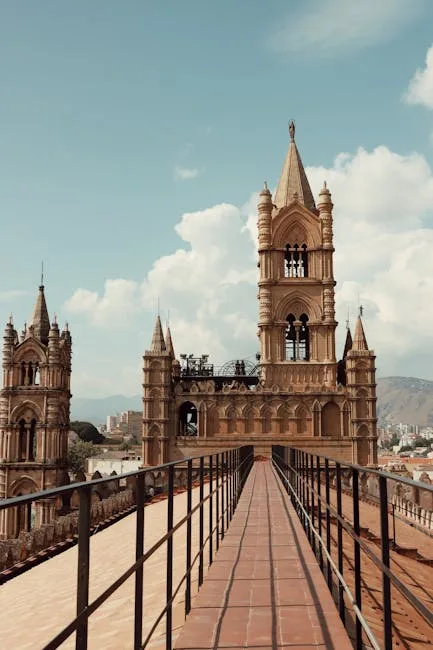






Introduction — Why Palermo Is a Playground for Urban Photographers
Palermo, the baroque and Arab-Norman capital of Sicily, is a kaleidoscopic city where every corner tells a different story. For photographers, amateur or pro, the place is a treasure trove of textures: sunlit peeling façades, bustling colorful markets, medieval alleys with dramatic perspective, seaside panoramas from natural overlooks, and monumental landmarks that change with the hour. This guide focuses on Palermo’s unmissable urban viewpoints, giving precise addresses, opening times, prices in euros and practical tips to help you get the most out of your photo sessions.
Urban photography in Palermo calls for a twofold approach: understanding Mediterranean light and respecting everyday life. Sunrises and sunsets create extraordinary contrasts between ochre buildings and deep blue sea, while midday light can reveal architectural details and golden mosaics. Beyond the tourist highlights, I’ve included lesser-known spots perfect for close-ups, environmental portraits and themed series (textures, doors, signs, night markets).
This guide is practical: each section includes logistical information (full site name, exact address, opening hours, prices in euros), immersive descriptions and concrete photographic advice (best time of day, recommended lenses, rough camera settings, possible permits). You’ll also find local tips — where to grab a coffee, how to avoid crowds and rules of courtesy toward vendors and residents. Palermo is lively and generous, but also intimate; with professional, empathetic behavior, it will reward you with unique images.
Whether you’re preparing a photo essay, a portfolio series, or simply a day of shooting, this guide provides a coherent, adaptable itinerary. I picked viewpoints that cover different angles: high panoramas (rooftops, hills), urban perspectives (squares and key junctions), scenes of daily life (markets and ports) and architectural details (cathedrals, palaces). Each section helps you compose images, capture the soul of the place and make the most of your time on location.
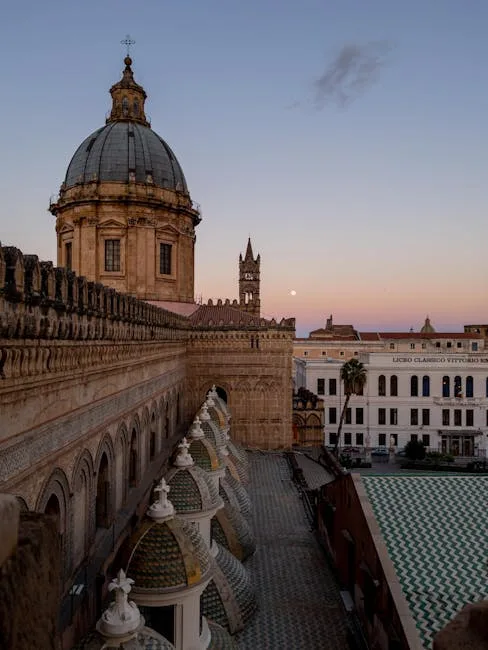
Finally, this document includes suggested image markers to spark inspiration (<img width="488" height="650" src="https://ue.is/wp-content/uploads/sites/32/2026/06/palermo-cathedral-rooftop-view-at-sunset.webp" class="aligncenter" alt="Palermo Cathedral rooftop view at sunset » loading= »lazy » />). These correspond to concrete visual contexts — for example “Palermo Cathedral rooftop view sunset” — so you can picture the scene before you arrive. Charge your batteries, clear your memory cards and wear comfortable shoes: Palermo is a city for walking and looking closely.
1. Palermo Cathedral (Cattedrale di Palermo) — Roofs, Crypts and Historic Perspectives
Full name: Cattedrale di Palermo (Basilica Cattedrale della Santa Vergine Maria Assunta)
Address: Corso Vittorio Emanuele, 90040 Palermo PA, Italia
Opening hours: 7:00–19:00 (cathedral entry), roof access: 9:00–17:00 (closing times vary by season)
Price: Cathedral entry free (donations welcome), roof visit: €4.00 (approx.), museum and crypt: €3.00–€5.00 depending on sections
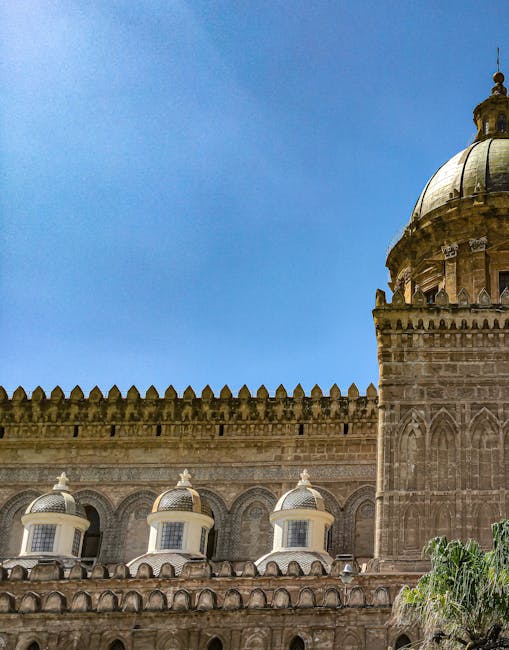
Palermo Cathedral is an ideal starting point for any urban photo exploration. From the outside its composite silhouette — Islamic arches, Norman towers, Baroque additions — makes for dramatic low-angle shots. The real draw for photographers is the rooftop: from the terraces you’ll overlook Via Vittorio Emanuele and capture aerial views of the historic center. Morning and late afternoon light create long shadows that sculpt reliefs and surrounding domes.
Photo tips: a 24–70mm lens is perfect to frame the cathedral and the urban fabric around it; a fast 50mm is great for architectural details. During golden hour, slightly underexpose to protect the bright highlights of the pale stone. For night shots, use a tripod (check at the entrance whether tripods are allowed) to make long exposures that show the city lit up.
Local tips: avoid the 10:00–14:00 window when tour groups converge. For more intimate compositions, wander the alleys descending toward Piazza Bellini and Via Maqueda, just a few minutes’ walk away, where you’ll find old doors and textured façades.
2. Teatro Massimo and Surrounding Roofs — Theatrical Drama and Urban Lines
Full name: Teatro Massimo Vincenzo Bellini (commonly Teatro Massimo)
Address: Piazza Giuseppe Verdi, 90138 Palermo PA, Italia
Opening hours: Ticket office 9:00–18:00, guided tours 9:00–18:00 (last tours vary with performances)
Price: Guided theatre tours: €10.00–€12.00 (approx.), performances: variable €15.00–€150.00 depending on seating and the show
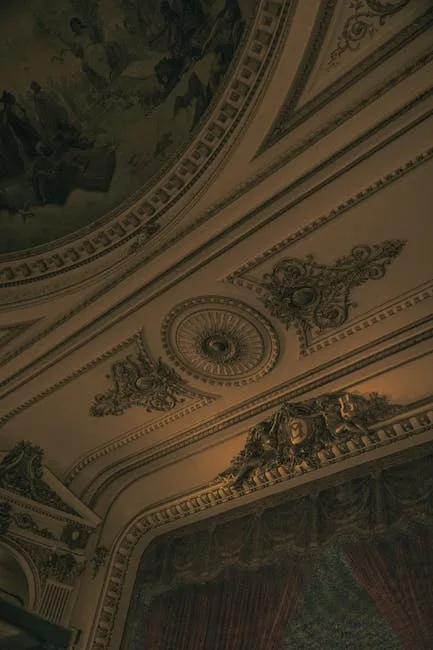
Teatro Massimo is Italy’s largest opera house and a highly photogenic landmark. The neoclassical façade and colonnade offer great opportunities for symmetrical compositions. The visual axis of Piazza Verdi lends itself to wide-angle shots. From the back and surrounding rooftops (some cafés and terraces), you can catch views toward Piazza Carlo Alberto and the rooftops of the Vucciria district on the horizon.
Photo tips: for the façade, step slightly off-center to avoid central distortion and emphasize leading lines. A 16–35mm on full-frame will create a dramatic perspective. At dusk, stage lighting and street lamps create a cinematic mood; favor a moderate ISO (400–800) and slow shutter speeds if you don’t have a tripod.
Access and logistics: if you want to shoot from private roofs (cafés/terraces), ask the staff for permission. Interior guided tours also provide access to balconies and box seats that are photogenic; letting the guide know you plan to photograph can sometimes buy you a few extra minutes to set up.
3. Monte Pellegrino & Santuario di Santa Rosalia — Natural Panorama and Bay Views
Full name: Santuario di Santa Rosalia, Monte Pellegrino
Address: Viale del Santuario, 90147 Palermo PA, Italia
Opening hours: Sanctuary open 8:00–12:30 and 14:00–18:30 (seasonal hours, check locally)
Price: Sanctuary access free, parking and services variable (€2.00–€5.00 depending on spot)
Access: Road access via Viale del Santuario (about 20–30 minutes from the center), hiking trails for walkers
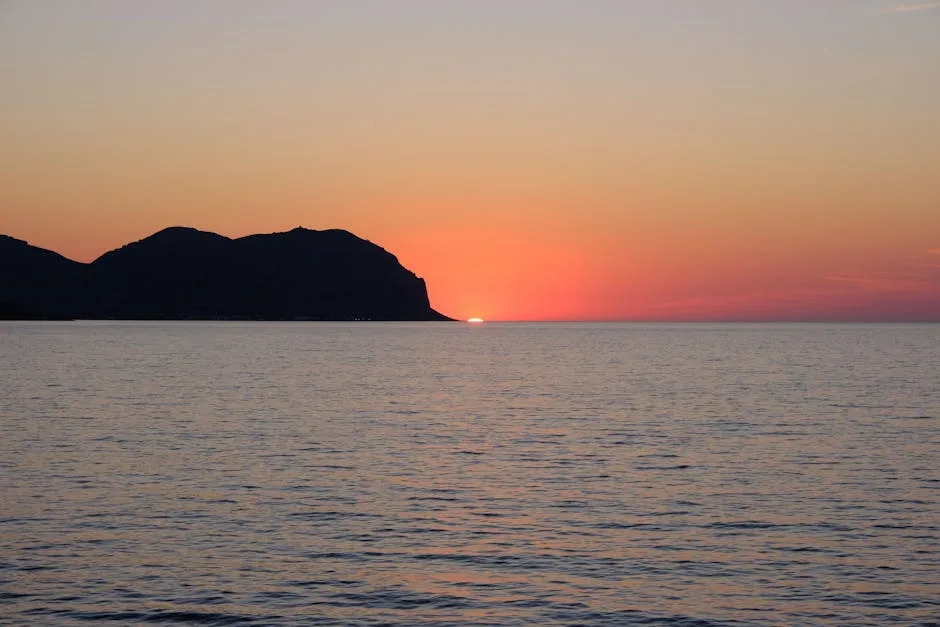
Monte Pellegrino was called “the most beautiful promontory in the world” by Goethe — and for urban photographers, it offers the best aerial view over Palermo, the bay and the port. From the terrace in front of the Sanctuary of Santa Rosalia you’ll get 180° panoramas perfect for stitched panoramas, sunsets and series exploring the city/sea relationship. The city’s layers — historic center, port area, long avenues — read clearly from this vantage point.
Photo tips: bring a wide-angle for panoramas (16–35mm) and a telephoto (70–200mm) to isolate distant urban details (boats, port silos, towers). Late afternoon light is often the softest; sunset brings warm tones while early morning offers a quieter atmosphere and occasional sea mists. Nearby trails also provide Mediterranean foreground vegetation for silhouette compositions of the city.
Local tips: avoid weekend late afternoons if you want solitude and clean compositions. The quietest spot is the small esplanade to the right (north side) of the sanctuary, reachable after a 10-minute walk from the main parking. For gear safety, keep bags closed and avoid leaving expensive bodies exposed; families picnicking sometimes appreciate seeing their photos if you offer a quick share.
4. Mercato del Capo and Vucciria — Street Scenes and Market Portraits
Full name: Mercato del Capo (Capo Market) / Mercato della Vucciria
Addresses: Mercato del Capo — Via Cappuccinelle, 90134 Palermo PA, Italia; Vucciria — Piazza Caracciolo, 90133 Palermo PA, Italia
Opening hours: Markets mostly open 7:00–14:00 (Capo); Vucciria has extended evening activity on some days (bars and street food)
Price: Free entry; food and purchases: €1.50 for an espresso, €4.00–€8.00 for a street food dish (arancini, pane e panelle)
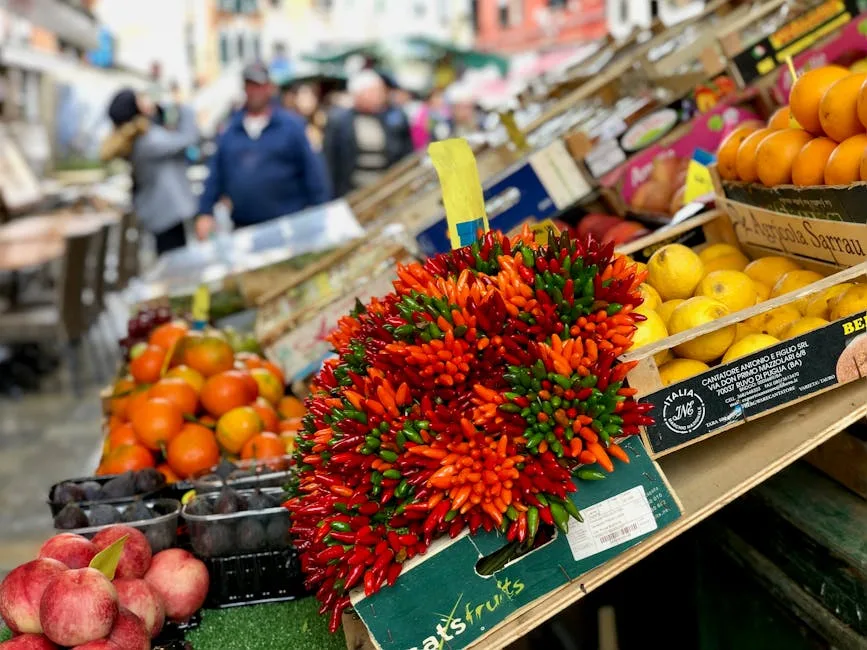
Markets are the beating heart of Palermo. Mercato del Capo is a maze of alleys where fishmongers, vegetables, herbs and textiles vie for space — an ideal playground for street photography, environmental portraits and color-focused series. Vucciria, historically a fish market, is an atmosphere lab: by day it’s noisy transactions and hawkers; by night small bars and trattorie turn the square into a festive hub.
Photo tips: use a 35mm or 50mm prime to stay discreet for portraits, or a 24–70mm for flexibility between wide scenes and details. Respect privacy: always ask before shooting close portraits — a smile and polite gesture often open doors. Shutter speeds should be quick (1/200s or faster) to freeze vendors’ movements. Shoot RAW and slightly lift highlights to preserve the vivid colors of the stalls.
Local tips: have breakfast at Bar Alba (Via Teatro Massimo, 30) for a quick coffee before plunging in. If you buy something, haggle respectfully; vendors appreciate good humor. Beware of pickpockets in crowded areas — keep pockets zipped and carry a secure front-facing bag.
5. Foro Italico, La Cala and the Waterfront — Maritime Lines and Urban Reflections
Full name: Foro Italico Umberto I / La Cala (Port of Palermo)
Addresses: Foro Italico Umberto I — Lungomare Cristoforo Colombo, 90133 Palermo PA, Italia; La Cala — Porto di Palermo, Molo Santa Lucia, 90133 Palermo PA, Italia
Opening hours: Foro Italico promenade accessible 24h; port activities and museums vary seasonally (9:00–19:00)
Price: Promenade access free; boat trips (various options): €10.00–€35.00 depending on duration
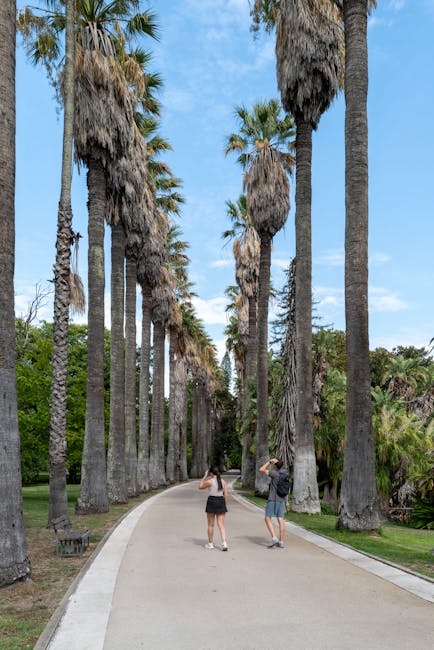
Palermo’s waterfront reveals a different side of urban views: long lines, reflections on water, silhouettes of boats and warehouses. The Foro Italico, a spacious palm-lined esplanade, creates linear perspectives ideal for minimalist compositions. From La Cala, the historical port, you can photograph juxtapositions between urban architecture and maritime activity — cranes, freighters and small traditional boats.
Photo tips: for reflections and silhouettes, shoot early when the water is calm. A polarizing filter can cut unwanted glare and deepen skies. For graphic compositions, use longer lenses to compress planes and isolate industrial or maritime details. Sunsets over the sea are particularly photogenic from Lungomare Cristoforo Colombo.
Local tips: walk the quay to find less-touristy vantage points toward La Cala. If you plan a sunrise session, park near the Vittorio Emanuele Orlando monument (Foro Italico) for a quick start. Evening boat cruises let you photograph the city’s seafront when it’s lit up; book in advance in high season.
Conclusion — Weaving Your Images into Palermo’s Story
Shooting Palermo means composing a narrative where history and everyday life coexist. The stops outlined here — the cathedral and its roofs, Teatro Massimo, Monte Pellegrino, lively markets and the waterfront — form a coherent thread to explore the city from multiple angles. Each place lets you work on a different skill: monumental architecture, street portraiture, urban landscape and coastal panorama.
For a successful photo essay, think in series: one on “doors and façades of the old town,” another on “market vendors and textures,” and a third on “the sea-city relationship” from Monte Pellegrino and La Cala. In post, keep colors natural but don’t hesitate to enhance texture and clarity to bring out ancient stone and mosaics. Prefer RAW format to maximize latitude on bright stone highlights and deep shadows.
Respect and ethics are essential. In Palermo, human proximity is part of the charm; ask permission for portraits, offer a print if you shoot several people and avoid monopolizing a spot when others are waiting. Check local regulations if you intend to fly a drone — the port area and certain monuments have strict restrictions.
Finally, adapt your route to weather and season: in summer start early and favor evening sessions; in winter the low, soft light allows relaxed shooting all day. Palermo rewards curiosity and patience — revisit the same spots at different hours to discover new moods. With this guide you have a practical, inspiring itinerary to capture Palermo’s urban soul — happy shooting, and don’t forget to try a granita between frames.